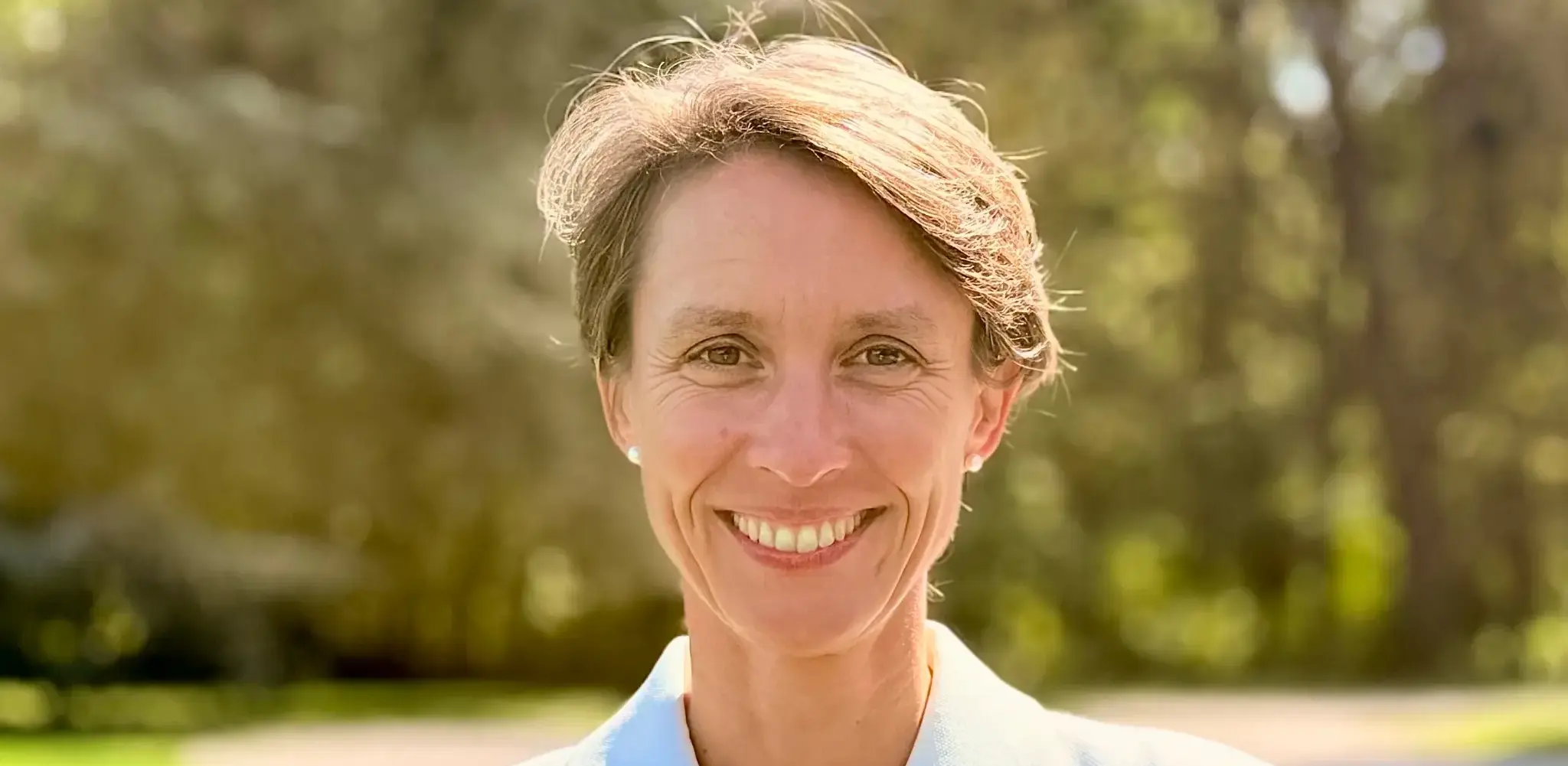
“Giving women’s voices a platform is what leads to everything else.”
You recently spoke at the latest “Café Parité” event organized by the “Un Une” Parity Network. What powerful message did you want to convey to all the network’s ambassadors who were present at the event?
Caroline Grandjean: The message I wanted to convey by accepting Aurore’s invitation was to tell women that they need to have confidence in themselves. I’ve noticed, as many have, that the challenge women face in the workplace often isn’t a matter of skills, but rather their ability to envision themselves in leadership roles. They never think they’re good enough or competent enough. As a leader, I consider it my responsibility to show that you can hold high-level positions while still being yourself—that this is within everyone’s reach.
I also wanted to emphasize that women’s place in the workforce is never permanently secured. Even within an institution like La Poste, which upholds strong values of gender parity and equality, disparities may persist at the local level. We must not tolerate situations that do not comply with the Group’s policies.
How did you, personally, manage to overcome this obstacle?
Caroline Grandjean: Two factors were crucial in overcoming the confidence issues we all face. First, the lessons my mother taught me—she kept telling me throughout my childhood: “ You have to be independent, work on your own, and not depend on anyone.” That encourages you to be financially independent, to get an education, and to take on more responsibility.
Later on, as my career progressed, I was fortunate to have particularly brilliant female bosses who inspired me to be like them. That really helped me envision my future. Without those inspiring role models, I might have had less motivation to aim for leadership positions.
At what point in your career did you feel the desire to move into leadership roles to make a difference?
Caroline Grandjean: To tell the truth, the question didn’t arise in those terms at first. Very early on, right after I graduated, I held management positions overseeing large teams. My first job was at what was then called the Departmental Directorate of Public Works—a very male-dominated and technical field. In fact, I don’t think they’d ever seen a woman heading up such a department before. My status as a civil servant at the time facilitated this rapid rise to a leadership position.
It was over time and through experience that I became aware of gender equality issues. At first, coming from an engineering school and having taken anonymous entrance exams, I believed that only competence mattered. It wasn’t until after a few years in very male-dominated environments that I realized how complicated the issue really was, and how unconscious biases ultimately put women at a disadvantage.
But I didn’t set out to become a leader to “avenge” anyone. I rose to these positions, and then I realized that, at my level, it was essential to help women recognize their potential and find their rightful place. Today, I am convinced that gender diversity is an essential prerequisite for collective performance. In other words, a team only functions well when perspectives are balanced and diverse. I have never found anything more effective than balance.
In fact, holding this position requires you to serve as a role model. How do you embody this influential role with your teams today? ?
Caroline Grandjean: It’s a delicate balance, because we have to find the right middle ground between militant feminism—which isn’t always the best way to advance the cause—and inaction. What we all do as managers—especially at La Poste—is to ensure that our hiring practices achieve gender parity where it’s lacking, and to ensure pay equity during raises. This is governed by company policy, so I’m not doing anything out of the ordinary, but it’s something we have to keep in mind at all times.
Beyond HR processes, I pay attention to seemingly trivial but crucial everyday actions. In meetings, for example, I make sure women aren’t cut off, or I give them the floor back when a man rephrases their point right after they’ve spoken. It’s very important to give women back their voice in meetings. I also encourage the promotion of female employees in the creation of internal content or team presentations, to give them the opportunity to showcase their work. Giving visibility to women’s voices is what drives everything else.
How do you actually address these gender equality issues in your day-to-day work?
Caroline Grandjean: I try to support women as much as possible. When I joined Viapost, a logistics and transportation subsidiary, I felt like I’d been transported back a few years in terms of gender parity: there were very few women because this sector isn’t very attractive to them. What I’m most proud of is having helped people understand the importance of having a percentage of women in management positions that matches the percentage of women on the front lines. It sounds like a school project, but by making this a metric tracked during performance reviews, managers took ownership of it. That was a turning point. If it can’t be measured, it doesn’t exist. Because without metrics, we can’t tell if we’re on the right track. Of course, metrics aren’t everything—they must be accompanied by a comprehensive policy of engagement, recognition, and mentoring.
At La Poste headquarters, there are already many well-structured programs in place, led by the network and Human Resources. My role there is primarily to support, promote, and expand these initiatives.
What advice would you give today to a female employee at La Poste who is still hesitant to apply for leadership positions?
Caroline Grandjean: Half-jokingly, I’d tell them: If you don’t apply, you can be sure that a man less qualified than you will do so in your place! Women often wait until they’re above the required level before applying. It’s our education and society that have conditioned us this way. But you shouldn’t hesitate—otherwise, you’ll end up feeling frustrated when you see a less qualified colleague get the job.
On has a more serious note, I think we need to remove the barriers related to family responsibilities. At La Poste, for example, we’re fortunate to have flexible work arrangements and supportive managers, which make it possible to balance personal and professional life with ease in the vast majority of situations.
Finally, never forget that to advance the role of women in the workplace, we need role models to lead the way. If no one takes the first step, nothing will change!
Similar news stories
-
September Editorial by Aurore Mayer: Gender Parity—An Inspiration for Transformation, a Breath of Fresh Air for the Organization
-
Un Une: Two new episodes of “A part Egale” you won’t want to miss this summer
-
July Editorial by Aurore Mayer: Summer—Time for a Midyear Review Before a Well-Deserved Break!
-
May Editorial by Aurore Mayer: Gender Parity, a European Vision
-
Profile: Stéphanie Humbert, Establishment director
-
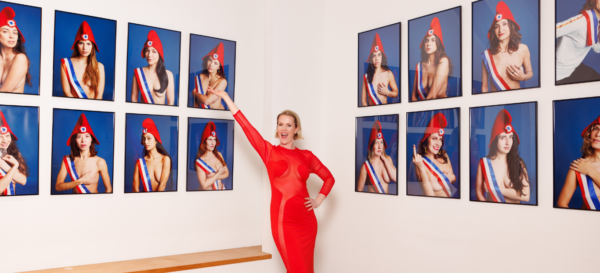
“Every Woman Embodies Marianne,” by Sylvie Castioni
-
March Editorial by Aurore Mayer: March 8… And the Rest of the Year!
-
January Editorial by Aurore Mayer: Let’s Make 2026 a Year in Which Gender Parity Is a Given