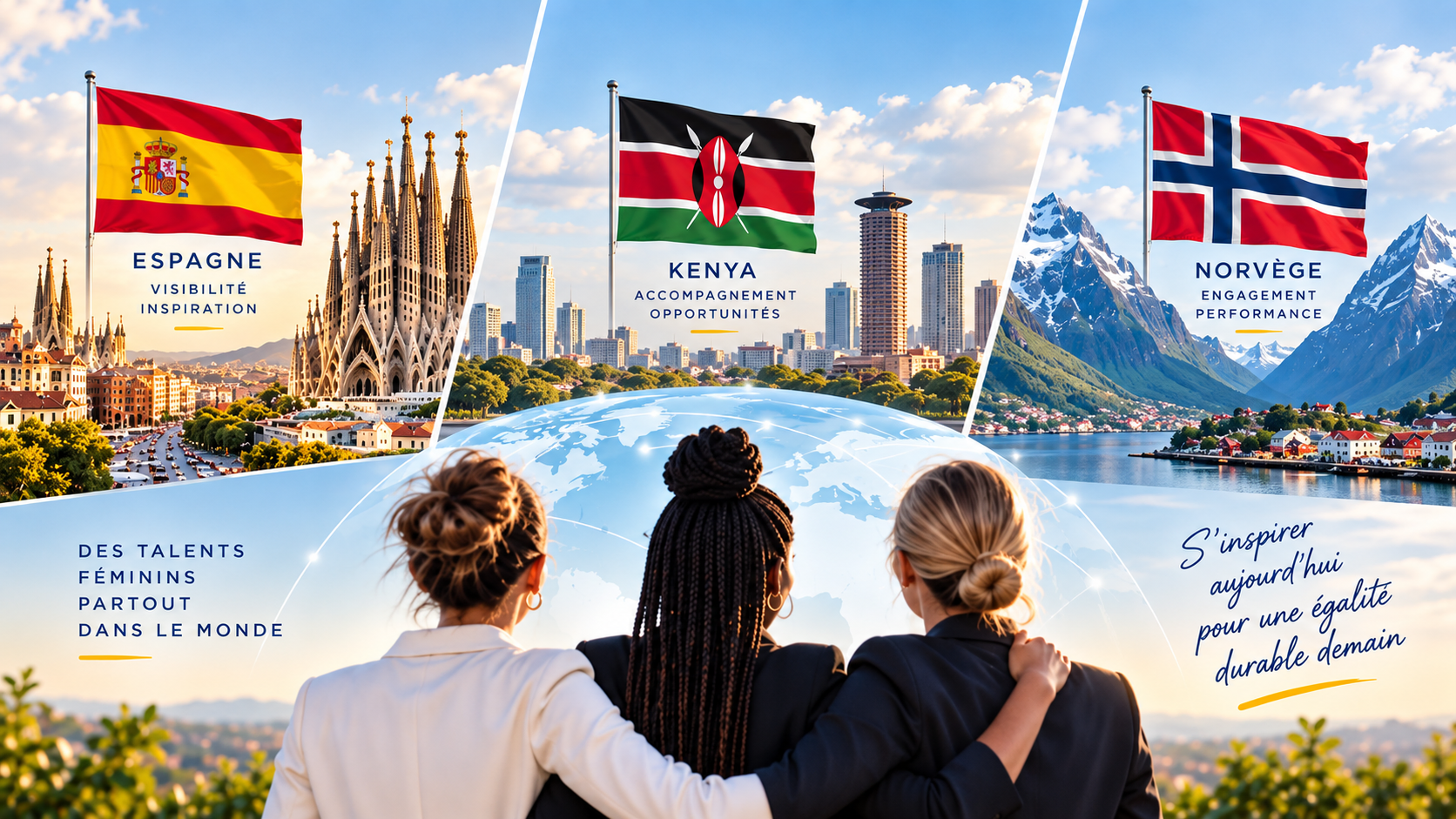
When Inspiration Comes from Elsewhere: Three International Initiatives We Can Learn From
1/ Enagás: Making Women More Visible in Sectors Where They Are Still Underrepresented
In the energy sector, which has historically been dominated by men, the Spanish company Enagás has chosen to take proactive steps to attract more women to its professions.
Through communication campaigns such as “We Are Looking for Women Like You, ” the company highlights the career paths of its female employees and presents them at universities, schools, and recruitment events. The goal is simple: to help young women envision themselves in roles they might not immediately identify with.
This commitment continues internally through several development initiatives, including the Women with Talent program and the Women in Networking network, which promote the sharing of experiences, professional development, and the creation of new career opportunities.
By raising the profile of women’s career paths, Enagás is helping to change perceptions and broaden the range of possibilities.
Key takeaway: Role models play a crucial role in educational and career choices. Seeing women succeed is often the first step toward daring to envision a future for oneself.
2/ East African Breweries: Supporting Women’s Careers at All Levels
In Kenya, East African Breweries Ltd (EABL), a major player in the agri-food sector, has made the representation of women at all levels of the company a key goal of its transformation. Having long faced underrepresentation of women, particularly in technical and leadership roles, the company has implemented a comprehensive strategy to promote women’s access to all career paths.
This ambition has translated into concrete commitments: gender-balanced hiring, the development of apprenticeship programs focused on science and technology (STEM) fields, career development support, and the creation of the internal Spirited Women Network. A mentoring program complements these initiatives to help female employees develop their leadership skills, expand their networks, and build their confidence.
The results are significant: the proportion of women on the executive committee has risen from 18% to 36% in just a few years, while their representation among senior managers has increased substantially.
Key takeaway: The development of female talent relies on a comprehensive approach that combines recruitment, support, mentoring, and the visibility of role models.
3/ Equinor: Making Gender Parity a Management Priority
In Norway, the energy group Equinor believes that diversity is not just a human resources issue, but a true driver of collective performance.
The company has thus incorporated diversity and inclusion metrics into its strategic management. The increase in the number of women hired, their access to leadership positions, and the conditions that foster an inclusive work environment are monitored at the highest levels of the organization.
Managers are also encouraged to develop practices that promote inclusion within their teams and are evaluated on their ability to create an environment where everyone can fully find their place.
This approach helps embed gender parity in management practices on a long-term basis and makes it a shared responsibility at all levels of the company.
The key takeaway: What gets measured improves. When gender parity becomes a goal that is monitored and championed by leadership, it ceases to be merely a principle and becomes a true driver of transformation.
While these initiatives may differ, they share a common conviction: advancing gender parity requires inspiring role models, support systems, and a concrete commitment from organizations. Whether it involves mentoring, raising the visibility of female talent, or managerial leadership, these experiences remind us that lasting change is possible when it is part of a collective and proactive effort.
Similar news stories
-

3 Initiatives That Make a Difference in the Fight for Gender Equality
-

5 Cultural Recommendations for This Summer
-
The 5 Key Milestones in the Advancement of Women’s Rights That We Owe to Europe
-
The 5 European Leaders Driving Gender Equality
-

5 Resources to Help Ensure Women Are No Longer Invisible in History
-
Five Feminist Figures in Mentoring
-

Our Recommendations: Gender Equality in Music
-

Is Diella the ideal woman?