
Rémi Feredj: “Single-sex education is an anomaly. Coeducation should be the norm.”
What does the concept of parity mean to you?
Gender parity reminds me of the need to legislate on something that should be self-evident. We have made little progress since the debates of the 2000s, when the principle of equal access for women and men to positions of responsibility was enshrined in the Constitution. I had mixed feelings about this, given the principle of universality enshrined in the Constitution; but the facts are clear: beyond this intellectual stance, we must acknowledge the need to correct the disparities that disadvantage women, which clearly constitute a breach of this principle of universality.
How can we approach this issue to overcome this paradox?
We must view this issue as a global social phenomenon—and with clear-eyed realism. Gender inequality is one manifestation, among others, of violence against women. It is a manifestation of exclusion; it is a sign of a system that fails to see women, that does not take them into account, and that turns a blind eye by focusing on supposedly more important issues to address: There are always all sorts of problems to solve, but this one is a problem in its own right, and everyone must do their part from where they are and who they are. As a business leader, I have a role to play within the company and in its governance to bring this issue to the forefront. As a man, too.
As a business leader, do you personally endorse the findings of studies that link gender diversity to performance?
I could say yes just to go along with the crowd, but I think linking gender diversity to performance is framing the question the wrong way. First, we need to establish a link between a lack of gender diversity and violence. When you walk into an executive committee meeting where there are only men, I personally consider that to be a form of violence. It casts women as “barbarians,” in the ancient sense of the term: barbarians are those on the other side of the border, those who don’t speak the same language, those who aren’t one of us. A lack of gender diversity is a form of division—symbolic exclusion.
But division should not be met with more division; that is why I find quotas for women, people of color, members of a particular religion, or individuals with a particular sexual orientation unbearable. This criteria-based approach creates new divisions and further fragments society. That is not the goal of gender parity in the workplace.
So, what approach do you recommend?
We must prioritize natural law over positive law! By natural law, I mean the fact that, by nature, there are as many men as there are women on the planet, and that it is an injustice—in the strongest sense of the word—to see human communities deprived of women or deprived of men. To correct this anomaly, I believe we must act by taking into account collective psychology and its driving forces.
What does it go through?
It starts by forcing men to confront their own ingrained views on gender relations. When a man interrupts a woman who is speaking, there is good reason to ask him what justifies cutting her off. Yes, one could argue that the opposite happens as well—but that’s just sidestepping the issue; it’s pretending that when a woman is cut off by a man, it doesn’t reflect the gender dynamics in our societies. Something is at play here that is beyond our control, something passed down to us through an unconscious legacy, as we accept on a daily basis that men are listened to more and women are interrupted more often.
What’s next?
Next, we must provide a sense of security. Let me return to the example of speaking up: when, as a woman, you’re used to seeing women get interrupted—or even being interrupted yourself—you don’t speak up with the same confidence. This applies to anything that implicitly causes women to doubt their place, their legitimacy, or the attention they deserve. This doubt is paralyzing. If we want women to overcome this, we must demonstrate that those in leadership roles have every right to be there.
Which brings me to a third point. Women need to feel protected by the presence of women in leadership positions above them. Not because these women should protect them in the name of solidarity among women, but because the fact that there are women in leadership roles who are respected sends a reassuring (rather than merely reassuring) signal to all women in the company. Gender parity has this role to play: signaling to the entire organization that it is normal for women to be fully recognized for their roles and skills and that they can take action.
But doesn’t sexism—which remains deeply ingrained in our subconscious and continues to manifest itself in everyday life—create intermediate barriers between the message of equality and the sense of security?
That brings me to my fourth point: zero tolerance for sexism! People tell me, “I don’t want to be managed by a woman.” Well, okay—you won’t be, since you won’t be working here anymore. When there are cases of sexual harassment, there’s no point in debating it endlessly; it’s simple: No means no! Having said that, we know the problem also lies in the fact that victims of sexist behavior and sexual harassment remain silent. What this tells us above all is that they don’t trust us. Our challenge, therefore, is this: to build trust and take action so that anyone whose dignity has been violated by sexist remarks or acts—or by sexual harassment—feels empowered to break the code of silence and knows they will be heard.
Similar news stories
-
“Giving women’s voices a platform is what leads to everything else.”
-

September Editorial by Aurore Mayer: Gender Parity—An Inspiration for Transformation, a Breath of Fresh Air for the Organization
-
Un Une: Two new episodes of “A part Egale” you won’t want to miss this summer
-
July Editorial by Aurore Mayer: Summer—Time for a Midyear Review Before a Well-Deserved Break!
-
May Editorial by Aurore Mayer: Gender Parity, a European Vision
-
Profile: Stéphanie Humbert, Establishment director
-
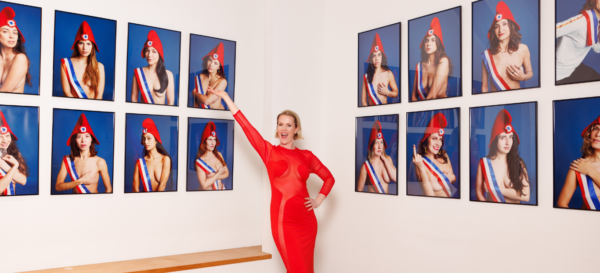
“Every Woman Embodies Marianne,” by Sylvie Castioni
-
March Editorial by Aurore Mayer: March 8… And the Rest of the Year!