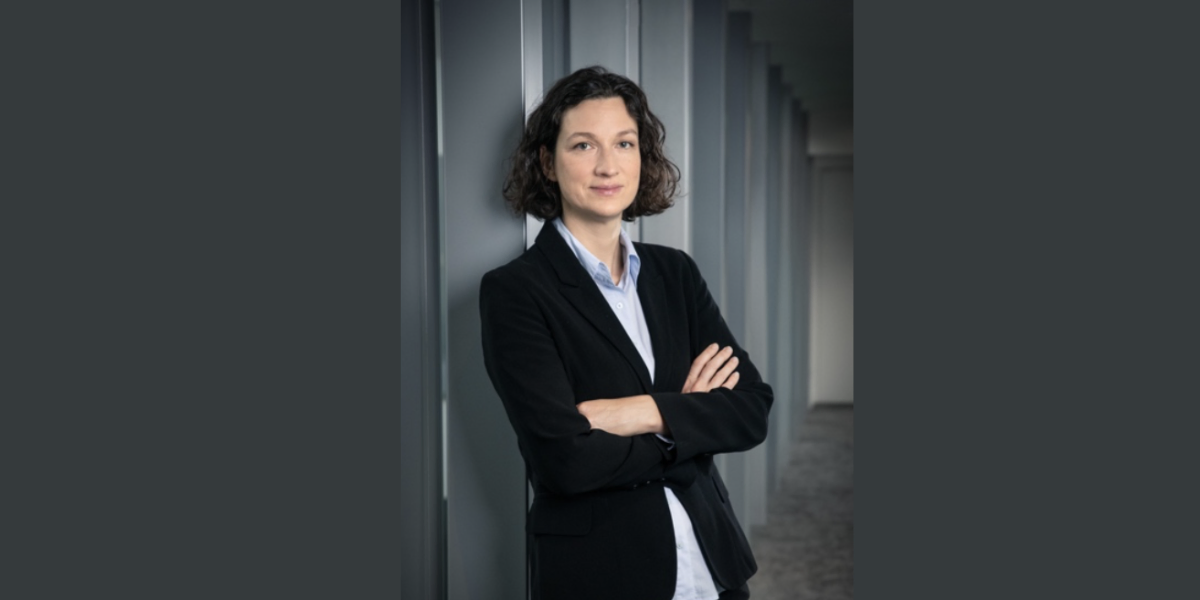
Delphine Mallet: “We must move beyond our beliefs about leadership being embodied by a ‘strong man.’”
What does gender equality mean to you?
Above all, this is a societal issue. I refuse to accept the idea that, by the time the next generation comes along, we won’t have moved beyond certain limits on this issue, just as we have on other issues of diversity (age, socioeconomic background, etc.).
Nothing worries me more in today’s world than a homogeneous group—especially if that group is tasked with making decisions that affect the rest of society. The more we are among “like-minded” people, the less original our ideas become. In the short term, this can be reassuring and may even work. But even then… Because certain short-term challenges (the environment, demographics, health, etc.) call for complex solutions that take into account a variety of perspectives.
What role should the company play?
For companies, the issue of diversity is more complex than it seems, because companies tend to foster homogeneity: processes, codes of conduct, interpersonal styles, and even language (acronyms, “corporate” grammar, etc.) all contribute to neutralizing differences… Nevertheless, individuals continue to have diverse frames of reference. As a result, we see a certain superficial uniformity in the workplace, which leads us to believe that we are all the same and adhere in the same way to a “common” standard; but behind this belief, there may be individuals or groups of individuals who do not feel entirely comfortable with the proposed model and conform to it despite themselves, or whoengage in self-censorship. When a portion of a company’s workforce is conformist or self-censoring, the company loses potential in terms of creativity, originality, andauthenticity. It also loses its ability to represent society and speak meaningfully to its diverse segments. This is where the issue of diversity becomes a problem for the company.
Our major current challenges—health, aging, education, the environment, among others—require attention, empathy, a nuanced approach, creativity, resilience…and a groundbreaking vision in a world that can no longer function sustainably as it did before. When asked what adds value to a company compared to a service platform, we can therefore answer that it is the depth and originality of its vision. I believe it is absolutely essential to place issues of gender equality and diversity at the heart of this vision.
What needs to change for this vision to become a reality?
It is our beliefs that need to change. We—and I include myself in this “we”—remain too fascinated by the figure of the self-centered, macho leader who single-handedly embodies the vision, and whose autocratic tendencies even seem to confirm his exceptional nature. We hear endless talk of kindness, collective intelligence, and gender diversity, only to ultimately be presented with “strong men” as models of success—men who owe most of who they are to their individual talent and whose success is measured by very traditional criteria (wealth, the ability to command obedience, the drive to conquer territory…). It is a perplexing paradox…
Fortunately, we live in an era where society wants to do the right thing, and I believe we must harness this collective desire to direct our efforts toward moving beyond this traditional model of leadership. To do this, we absolutely must diversify the role models we promote and do a better job of highlighting alternatives to this traditional image of success. We need new icons of success and impact.
Do you think quotas are necessary to diversify the characters?
Quotas are a necessary evil. Of course, we’d all prefer to do without them. But in practice, we need a standard to establish a new normal. Achieving gender parity can’t be improvised: if you want women in leadership roles, you need a pool of high-potential women; further upstream, we need gender diversity in the workforce; even further upstream, gender diversity in career paths—and so we go all the way back to education and the fight against stereotypes starting at a very young age. If you just let things take their course, perhaps it will happen “naturally”—in a century! Quotas provide a tool to accelerate this process.
What’s interesting about quotas is that they push companies to take action at various levels in order to equip themselves with the means to actually have more qualified women to appoint to leadership positions. And it’s clear that this is exactly what companies are doing, by raising awareness of their professions among teenagers who are deciding on their future paths, by reevaluating their selection criteria in the hiring process, by providing closer guidance on career development, and by implementing coaching and confidence-building programs for women, among many other initiatives.
Do you think that women’s sense of illegitimacy remains a major cause of the glass ceiling?
The question of women’s legitimacy was first raised by society. Not so long ago, women didn’t vote and didn’t have their own bank accounts. Personally, I’ve been fortunate enough in my career not to have faced this directly, but it’s clear that whenever there’s a trend toward more women in leadership roles, comments like “women, yes, but only if they’re competent” inevitably resurface. That strikes me as completely outdated! It goes without saying that women are just as capable as men of holding positions of responsibility. The fact that some women—just like some men—may not rise to the occasion seems to me to be simply a matter of chance within organizations, without attributing it to gender.
That said, it’s possible that this constant talk about women’s competence—and especially their leadership—sticks in their minds and makes them feel they have to prove themselves more than men do. In my view, it’s this perception that we need to address. Without getting bogged down in generalizations, it’s likely that women sometimes—out of “sincerity”—overly simplify their limitations in expertise or experience, or downplay their accomplishments. Instead of looking at the strength of their forehand, they tend to focus on the weakness of their backhand. Men also have doubts, but they don’t express them in the same way. There’s an opportunity here to ensure that doubt is expressed as it truly is in the workplace—it’s about asking questions above all else and being open to support from others. All the more so because I believe that each person’s ability to question their own infallibility is a leadership quality and opens the door to the true exercise of collective intelligence.
What other major challenge do you think is essential to address in order to achieve gender diversity?
A healthy work-life balance remains key—not only for gender diversity but also for addressing many of the challenges associated with the transformation of the workplace. Current models effectively exclude people who seek this balance from certain roles. There are jobs that, by their very nature, require irregular hours; this is the case for night work, which, incidentally, is also common in female-dominated fields, such as healthcare. However, a great many professions and levels of responsibility are, in practice, less compatible with family life, even though we could seek to organize work differently to make them so.
There are some fairly practical measures to put in place, such as banning meetings during certain hours. But there are also questions we need to approach differently: for example, the question of whether it’s necessary to have “ONE” leader, when we could imagine leadership roles being carried out by a pair or a trio of people, all with the same level of expertise, the same level of information, equivalent interpersonal skills, and similar legitimacy—so that the various stakeholders (employees, clients, etc.) can address a role as embodied by a team rather than a single individual who personifies that role. I see in these kinds of developments—which truly challenge our relationship with the organization and with work—ways to finally bring to life, in reality, all those soft skills that we cannot stop repeating are essential, while continuing to refer to the model of the more or less omnipotent “boss.”
What’s fascinating about the topic of gender diversity is that it raises questions far broader than it seems at first glance, and that it forces us to make real choices to contribute to a collective organization that is fairer, more balanced, more modest, and more versatile—all for the benefit of everyone’s quality of life.
Similar news stories
-
“Giving women’s voices a platform is what leads to everything else.”
-
September Editorial by Aurore Mayer: Gender Parity—An Inspiration for Transformation, a Breath of Fresh Air for the Organization
-
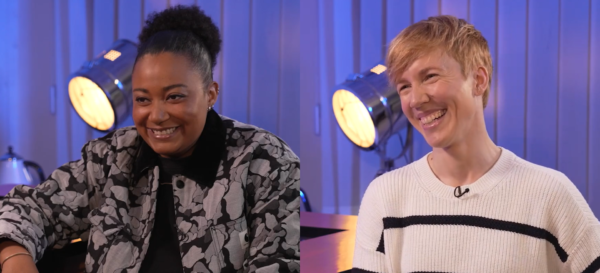
Un Une: Two new episodes of “A part Egale” you won’t want to miss this summer
-
July Editorial by Aurore Mayer: Summer—Time for a Midyear Review Before a Well-Deserved Break!
-
May Editorial by Aurore Mayer: Gender Parity, a European Vision
-
Profile: Stéphanie Humbert, Establishment director
-
“Every Woman Embodies Marianne,” by Sylvie Castioni
-
March Editorial by Aurore Mayer: March 8… And the Rest of the Year!