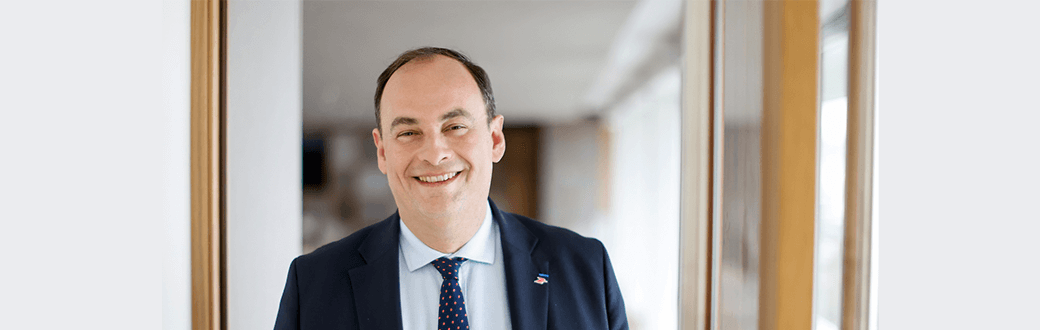
Philippe Dorge: “Gender parity is the ideal balance between men and women”
The team at the “Un Une” Parity Network met with Philippe Dorge, a member of the Group’s Executive Committee and our network’s first President for 2024. We discussed the significance of gender parity for businesses and society, the role of leaders in advancing it, and his commitments to our cause.
What is your vision for gender equality?
Parity is the ideal balance of genders.
Today, it is first and foremost a matter of the law. The Republic has established parity as a necessary mechanism within democracy. It also serves as a reminder that businesses operate within a republican framework and must fulfill certain obligations toward citizens. This is especially true for a company like La Poste, which has a republican mission and must be both committed and inspiring. La Poste, ranked first in the world for CSR in 2023, is leading by example. If La Poste can achieve gender parity, it proves that it is possible and that other companies can follow its lead.
And on a more personal level, what is your personal experience with gender equality?
This is a long-standing, personal, and sincere commitment—as a citizen, as a husband and father, and as a business leader. I am proud to have signed—back when I was HR Director at PSA—France’s first agreement on workplace equality in 2006. We made the front page of *Le Monde*! But a commitment to gender diversity goes beyond simply signing labor agreements or launching initiatives. It is a commitment that must be ongoing. In my 35 years of professional life, I have always been reaffirmed in my conviction that this is a real advantage for the company: work groups function better, and team performance improves as a result. Gender diversity helps us stay one step ahead in our industries. When we work on gender equality, we drive the company’s overall performance to new heights, to the benefit of everyone. Gender equality encompasses the broader issue of diversity and also drives HR and organizational processes. It’s meritocracy geared toward equal opportunity, with selection processes that are merit-based rather than “elective.” This shifts the focus toward greater cooperation, recognition of merit, and social progress.
What role do leaders play in promoting gender equality?
The role of executives is to be attentive, to articulate a vision, and to drive progress in this area with the same rigor as in all other areas relevant to the company’s strategy. This is a strategic issue that must be incorporated into executives’ strategic agreements. I myself have a gender parity metric in my performance plan. Specifically, I am evaluated on the proportion of women on my Executive Committee, among senior executives, and across the entire division. The CEO is responsible for getting the entire La Poste community on board with gender parity—not just at the executive level, but deep within the organization, starting with the teams that interact directly with customers.
What are your commitments to the “Un Une” Parity Network?
This network has a lot to say about gender parity and the company. The members of “Un Une” are full of ideas. My first job is to listen to them and relay their suggestions to the other executives in the Group to help put them into action.
I also want to support this network as it defines its priority issues and determines how to put those issues on the company’s agenda.
Together with Aurore Mayer and the ambassadors, we will also work to strengthen the network’s presence and activities across regions, departments, and business lines.
I am happy and proud to serve as chair of this network. The decision to have a rotating chairmanship leaves little time to act. But having limited time forces us to make the most of it.
Similar news stories
-
“Giving women’s voices a platform is what leads to everything else.”
-

September Editorial by Aurore Mayer: Gender Parity—An Inspiration for Transformation, a Breath of Fresh Air for the Organization
-
Un Une: Two new episodes of “A part Egale” you won’t want to miss this summer
-
July Editorial by Aurore Mayer: Summer—Time for a Midyear Review Before a Well-Deserved Break!
-
May Editorial by Aurore Mayer: Gender Parity, a European Vision
-
Profile: Stéphanie Humbert, Establishment director
-
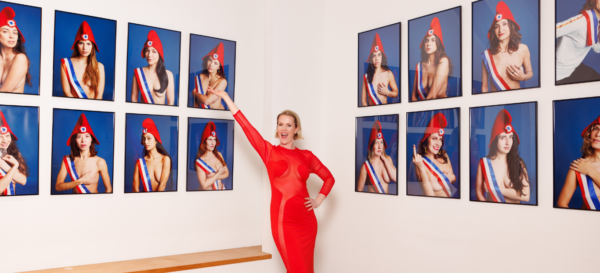
“Every Woman Embodies Marianne,” by Sylvie Castioni
-
March Editorial by Aurore Mayer: March 8… And the Rest of the Year!