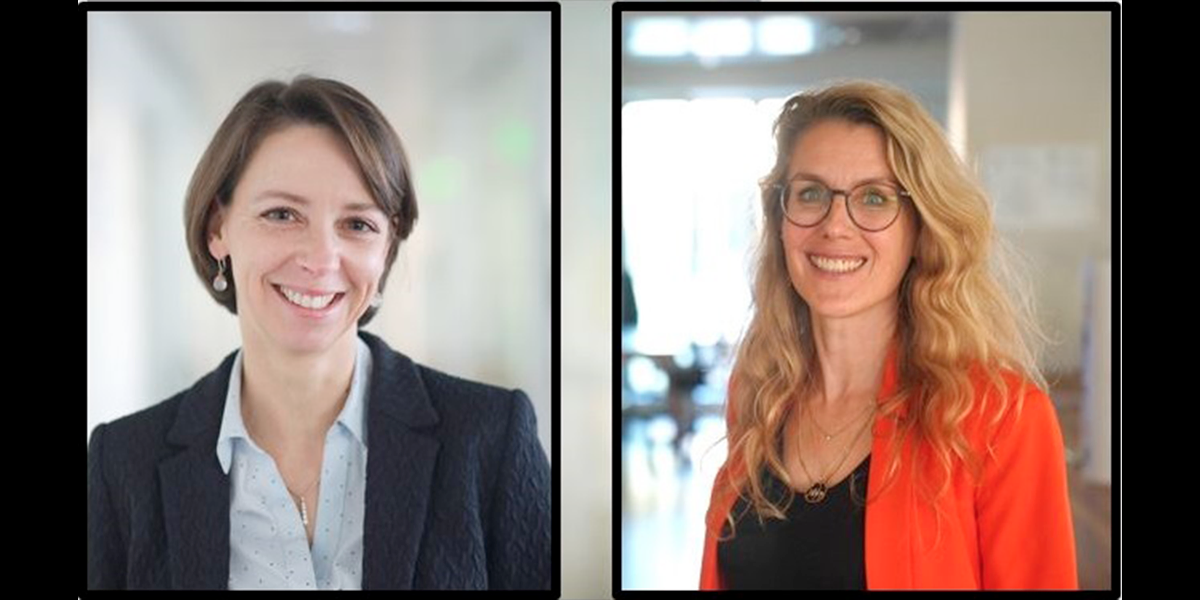
Joint Interview: Christelle Defaye Geneste and Aurore Mayer
An opportunity to come together and highlight the role played by La Poste Group in promoting workplace equality in Europe.
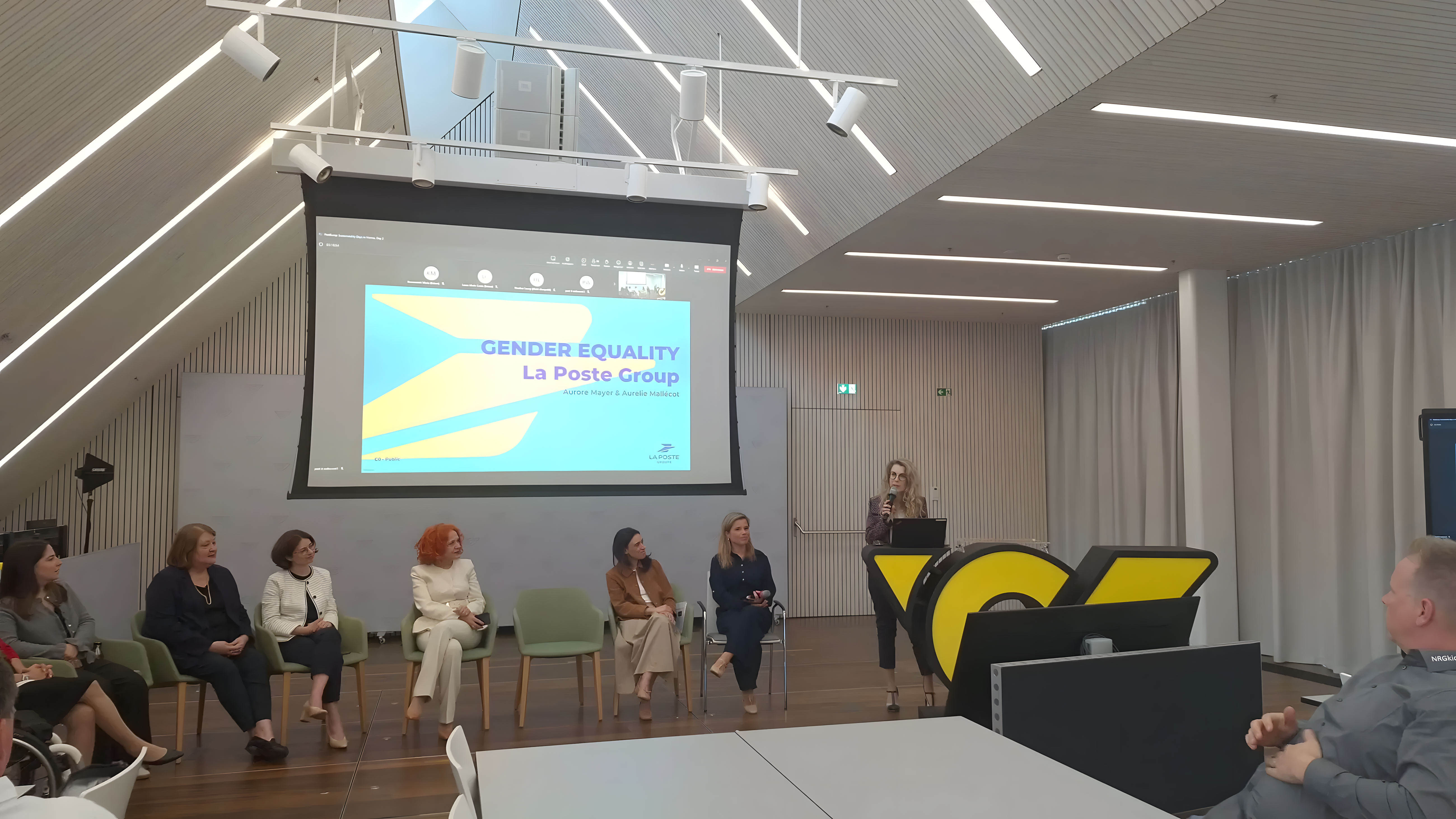
On this occasion, we met with Christelle Defaye Geneste, Director of European and Customs Affairs at La Poste Group, and Aurore Mayer, Director of La Poste Group’s “Un Une” Parity Network, to understand the convictions behind this strong and inspiring partnership.
Could you explain what PostEurop is and what its role is?
Christelle Defaye Geneste: PostEurop is a professional association based in Brussels. It represents all European postal services, which includes 53 members. Its main objective is to give a voice to the incumbent postal operators. In other words, all those designated to fulfill public service missions, such as the daily delivery of mail at affordable prices.
So is it a kind of spokesperson for the European postal sector?
Christelle Defaye Geneste: Exactly . PostEurop plays a vital role in lobbying European institutions—the Commission, the Parliament, and the member states. We believe it is always more effective to speak with a unified sectoral voice rather than as individual entities; this helps reinforce our messages. It is also a regional union within the Universal Postal Union (UPU), which is a United Nations organization. Finally, beyond lobbying, PostEurop facilitates the exchange of best practices and strategic discussions among operators on topics such as the environment and occupational health.
Why has PostEurop decided to take on this issue of gender parity?
Aurore Mayer: This initiative grew out of a discussion we had within the Parity Network with our President, Marie-Aude Dubanchet. Given the current international context—particularly the erosion, or even the disappearance, of women’s fundamental rights in certain regions of the world—we asked ourselves how we could take action and make a difference at our own level. The La Poste Group, with its deeply held values of workplace equality and diversity, has always had human rights embedded in its DNA. The idea was to explore how large companies can, by joining forces, engage in dialogue and exert influence at the international level to uphold and strengthen the values of gender equality.
Christelle Defaye Geneste: The international context has indeed been a determining factor. We are seeing significant pressure, particularly in the form of statements calling for the elimination of gender parity or diversity programs. This is even evident within the UPU, where gender parity programs are being called into question. In light of the rise in violence against women, we felt it was crucial for Europe—a continent where this issue remains a priority—to continue leading the way. The goal is for Europe to stand united in these shared struggles, to give these issues greater visibility, and to set an example—without pretension—by sharing our successes. And the postal sector is indeed quite exemplary in this regard, with numerous initiatives already in place.
What concrete insights can La Poste in France offer its European counterparts on the issue of gender parity?
Aurore Mayer: I believe that La Poste can contribute its practical experience and its ability to make a difference. We are a Group of 230,000 employees, and even though there’s still a long way to go, we’ve managed to make significant strides toward gender equality in the workplace. That’s what drives us: sharing what works for us, in the hope that others will be inspired by it—and vice versa. Because we’re convinced that by staying true to our core values—which are also those of Europe—this can become a real advantage and make a difference in the long run.
Christelle Defaye Geneste: This issue is all the more fundamental because La Poste is often deeply rooted in society. It has direct visibility among the public: showcasing best practices in this area can create a ripple effect. But it’s also a two-way exchange. We learn about very interesting initiatives from other European institutions, whether they are smaller or similar in size. It is this mutual inspiration that makes the project so powerful.
Similar news stories
-
“Giving women’s voices a platform is what leads to everything else.”
-

September Editorial by Aurore Mayer: Gender Parity—An Inspiration for Transformation, a Breath of Fresh Air for the Organization
-
Un Une: Two new episodes of “A part Egale” you won’t want to miss this summer
-
July Editorial by Aurore Mayer: Summer—Time for a Midyear Review Before a Well-Deserved Break!
-
May Editorial by Aurore Mayer: Gender Parity, a European Vision
-
Profile: Stéphanie Humbert, Establishment director
-
“Every Woman Embodies Marianne,” by Sylvie Castioni
-
March Editorial by Aurore Mayer: March 8… And the Rest of the Year!