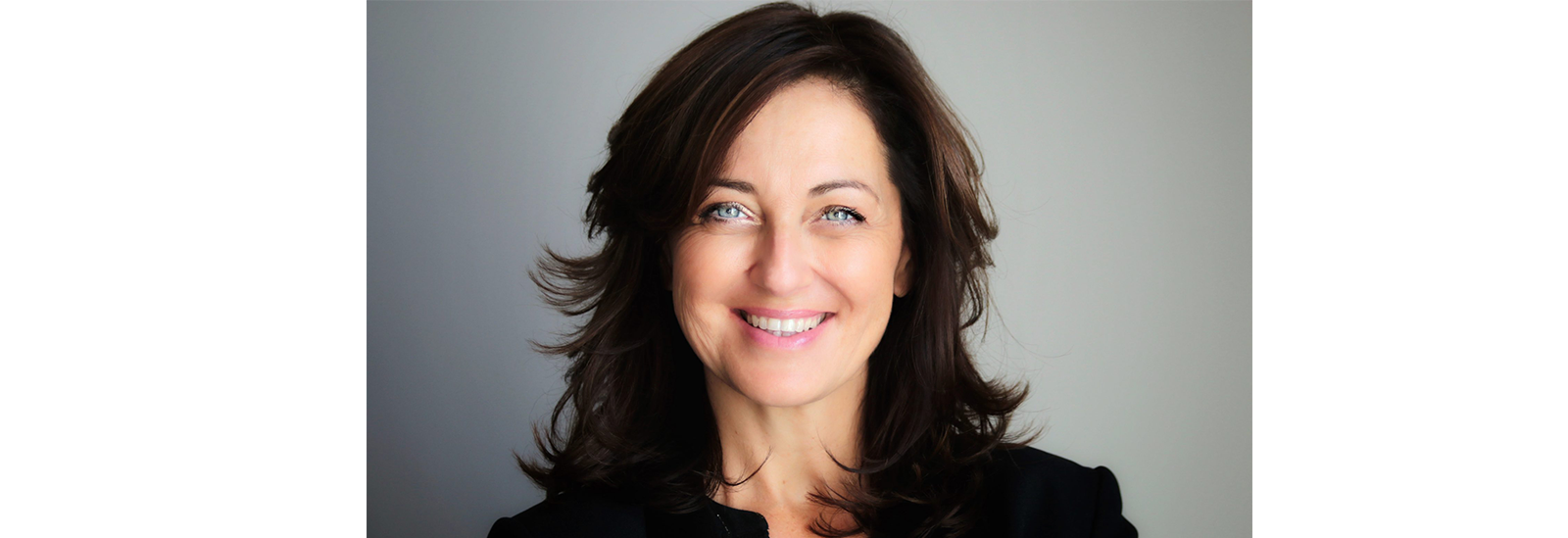
Interview with Florence Sandis
Florence Sandis is a prominent advocate for inclusion: she is a coach, speaker, trainer, entrepreneur, and author of *Break Through the Glass Ceiling* (Michel Lafon Poche, 2020). What drives her in each of her projects? Helping everyone overcome their obstacles to reach their full potential.
Together, we discussed the factors that still hinder gender parity—from persistent stereotypes to the rapidly growing men’s rights movement—as well as the essential role men play in ensuring inclusion for all, and the concrete organizational measures that can be implemented to firmly establish equality within the company. Interview.
What are the major obstacles that still stand in the way of achieving gender parity today?
FlorenceSandis: It’s a long-term effort because you can’t change almost archaic behaviors overnight. There’s still a lot of essential work to be done on changing attitudes. I know there’s a kind of “gender fatigue” and that people think we’re there, but it’s not a done deal. All it takes is a single incident or a president who makes people feel less inhibited, and we see that everything can change very quickly. Look at the United States, where we’ve seen an utterly unapologetic masculinist discourse spread in the blink of an eye. The latest figures are, in fact, mind-boggling. A recent OpinionWay poll from this month shows that 51% of men aged 25 to 34 believe that masculinist content “finally tells the truth.” We must therefore remain extremely vigilant when it comes to cultural trends.
Then there’s the issue of stereotypes. We often hear about the lack of a talent pool in technical fields, for example. So, yes, there are fewer candidates, but perhaps we need to look for them elsewhere and train them. And above all, we need to ask ourselves: are we really making them want to take this job? Have we been attentive enough to make them feel confident?
Finally, women themselves can be their own obstacle by setting limits on what they believe is possible. But this is also the result of the social and cultural norms we’ve been immersed in. Often, all it takes is for a man or a woman to say to them, “Of course you can! Don’t you have all the skills? That’s normal—if you had all the skills, you wouldn’t learn anything.” ” Simply saying , “You can do it—go for it!” can break the deadlock. We must fight against our own stereotypes—both men and women—and this requires a gradual shift in cultural attitudes.
La Poste also wanted to provide training for men. Together, you launched the “In a Woman’s Shoes” training program to show that men must be active participants in promoting equality. In your opinion, what individual actions can men take to ensure inclusion?
FlorenceSandis: The first step is to take a step toward empathy—to put yourself in a woman’s shoes. And that’s precisely the goal of the training: to see the barriers that men don’t necessarily perceive. Just as we would discover a lot if we put ourselves in a man’s shoes. This helps us understand the “hurdle race” that women have to overcome, whereas for men, the path is often much easier.
Next, I encourage them to pick up on subtle signs and to stay alert so they can notice if one of their female colleagues is struggling or being harassed. I raise their awareness of the importance of listening and asking questions to help others while also empowering them. This also means shifting perspectives to encourage women to take risks and, to that end, to be open to other criteria for recognition. Finally, I encourage them to become influential role models and to develop an action plan with inspiring initiatives so that they leave the training with concrete innovations to implement. The goal is to become aware of stereotypes, to recognize their role as managers, and to drive change throughout the organization.
How can we foster an organizational framework that enables equality to be embedded in the company in a sustainable way?
FlorenceSandis: The more paternity leave comes in line with maternity leave, the less having a child will put women at a disadvantage. We see this in Northern European countries: making leave equal and mandatory—at least in part—for men means that when they take on childcare responsibilities early on, they continue to care for their children for a longer period of time.
Then there’s the issue of quotas. No woman would want to be seen as just a quota, but we can see that it works. When there are quotas, we find women; when there aren’t, we make excuses. And women make up 58% of those with master’s degrees, so there’s no reason they should be less competent. So when I hear, “Yes, but that woman isn’t competent,” I reply: “Don’t you know any incompetent men in leadership positions?” Why, when it’s a woman, do we attribute her incompetence to the fact that she’s a woman, but not when it’s a man?”
It is crucial to remember that quotas are intended to restore balance. All studies show that the greater the diversity, the more a company reflects society, the better it performs, the more it retains its employees, and the more it retains its customers. At the end of the day, it’s just common sense.
If you’re interested in the “In a Woman’s Shoes” training program offered by the “Un Une” Parity Network in partnership with La Poste, visit your ambassador portal!

Similar news stories
-
“Giving women’s voices a platform is what leads to everything else.”
-

September Editorial by Aurore Mayer: Gender Parity—An Inspiration for Transformation, a Breath of Fresh Air for the Organization
-
Un Une: Two new episodes of “A part Egale” you won’t want to miss this summer
-
July Editorial by Aurore Mayer: Summer—Time for a Midyear Review Before a Well-Deserved Break!
-
May Editorial by Aurore Mayer: Gender Parity, a European Vision
-
Profile: Stéphanie Humbert, Establishment director
-

“Every Woman Embodies Marianne,” by Sylvie Castioni
-
March Editorial by Aurore Mayer: March 8… And the Rest of the Year!