
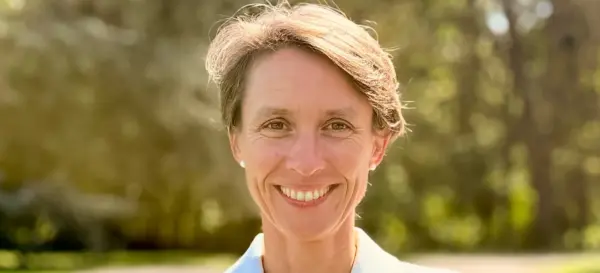
Valérie Decaux: “Fostering a culture of diversity everywhere”
Interview with Valérie Decaux, Deputy Chief Executive Officer in charge of human resources at La Poste Group
Would you say that gender equality is a performance issue or a values issue?
It’s a matter of performance, and it’s a matter of values.
This is a corporate culture issue that is all the more significant in our Group given that La Poste is the first public company to become a Purpose-driven company. Among our social commitments—which are at the heart of our business model and our strategic plan, “La Poste 2030: Committed to You”—inclusion stands out as a key priority. Gender parity is one of the primary drivers of this commitment.
We want to foster a culture of diversity wherever the company operates: in all our business sectors, in all regions, both in France and internationally.
We set performance metrics to track, such as the percentage of women in leadership positions. Today, at La Poste Group, 39.5% of our senior executives are women.
We take a proactive approach to attracting female talent to positions with a shortage of candidates. It is in this context that, among other initiatives, we launched the Artificial Intelligence and Data School. From the very beginning, we made it clear that we wanted the student body at this school to be equally divided between men and women. We were told it would be impossible. We proved them wrong by putting in the effort and determination.
Gender equality remains an important cause. It is crucial to find ways to talk about it that inspire action and make an impact. We must not let the discourse on gender parity become mere background noise. It is urgent that we not allow complacency to set in.
To what extent can an analysis based on non-financial (ESG) criteria be relevant to revitalizing efforts toward gender equality?
An ESG (Environmental, Social, and Governance) perspective is valuable because it frames the issue in terms of overall performance, which continually integrates economic, social, and environmental performance. This approach challenges business models, decision-making processes, the role of people in the value chain, and, of course, the challenges posed by transformation.
Gender parity certainly has a role to play in governance issues. Numerous studies have now shown that decision-making bodies with the greatest gender diversity are also the ones that make the highest-quality decisions… And this leads to tangibly compelling results in terms of economic and financial performance (Editor’s note: see, for example, the latest BlackRock study) as well as in terms of resilience in the face of uncertainties and crises (Editor’s note: see, for example, Women Equity’s analyses of the post-COVID period).
It has also been shown that a company’s exemplary approach to diversity is a factor in employee engagement (Editor’s note: see the 2023 ADP Institute study). This is especially true for younger generations, who—rightly so—view equity through the lens of personal fulfillment and psychological safety. To attract and retain talent, it is now essential to take concrete action to eliminate inequalities.
It makes perfect sense to promote gender parity in the workplace. But we’re seeing that this is a real shift, as evidenced by this unmistakable sign: the emergence of resistance. For example, we’re seeing a growing sense among some men that they now have less room to thrive than women because of the gender diversity goals that companies are setting for themselves. This is a misunderstanding: men don’t have fewer opportunities; they simply have more competitors.
Here is my deep conviction: equality is a matter of otherness. Engaging with others gives us a chance to grow and broaden our worldview. Confronting difference isn’t always comfortable; it takes real work and requires effort and tenacity. But there can be no exception to this duty to reach out to others when it comes to taking half of humanity into account! It is more important than ever to make the cause of women an issue that truly concerns everyone.
How can we ensure that the cause of women becomes everyone’s cause?
Our unconscious framework remains male-dominated. We consider it “normal” for men to hold positions of responsibility, when in reality it is “abnormal” for women not to be as numerous as men at all levels of the organization. All our efforts to promote gender parity must be directed toward establishing true equality—the kind that recognizes that women and men live in the same world and must have truly equal opportunities within it.
Similar news stories
-
“Giving women’s voices a platform is what leads to everything else.”
-

September Editorial by Aurore Mayer: Gender Parity—An Inspiration for Transformation, a Breath of Fresh Air for the Organization
-

Un Une: Two new episodes of “A part Egale” you won’t want to miss this summer
-
July Editorial by Aurore Mayer: Summer—Time for a Midyear Review Before a Well-Deserved Break!
-
May Editorial by Aurore Mayer: Gender Parity, a European Vision
-
Profile: Stéphanie Humbert, Establishment director
-

“Every Woman Embodies Marianne,” by Sylvie Castioni
-
March Editorial by Aurore Mayer: March 8… And the Rest of the Year!