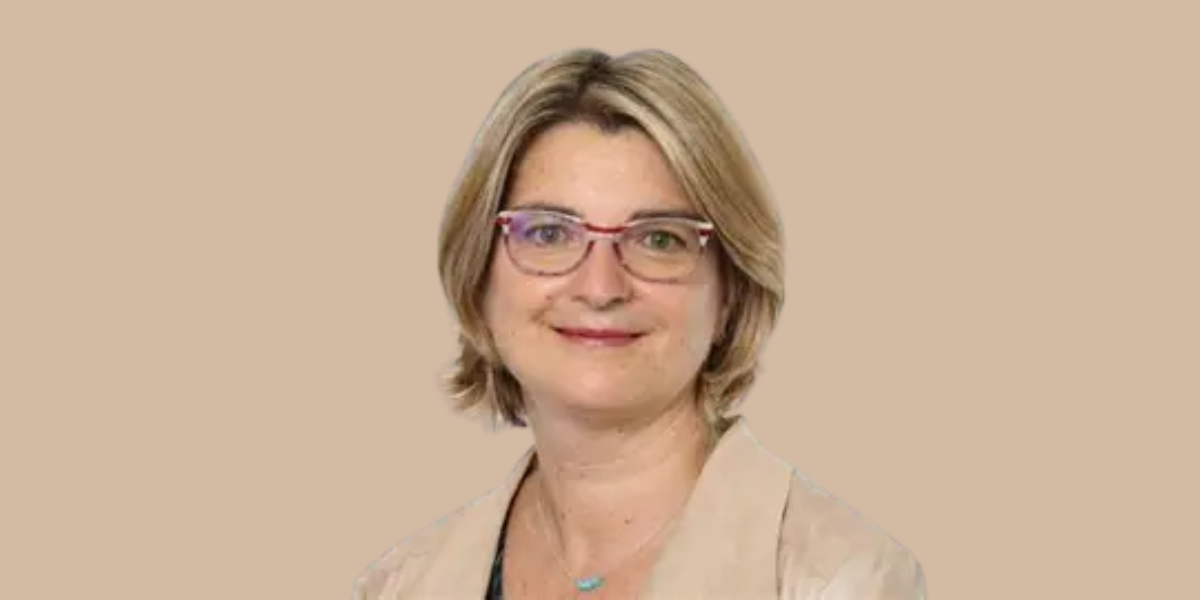
Marie-Hélène Michon: “This isn’t just a women’s issue—it’s an issue for all of us.”
What does the word “parity” bring to mind?
When I hear the word “gender parity,” I see great opportunities for dialogue, for sharing experiences, and for developing fulfilling career paths for the women in our Group.
With the goal of gender parity in mind, this involves taking responsibility for creating the conditions necessary for everyone to feel empowered and comfortable taking the initiative and pursuing their ambitions.
This isn’t just a women’s issue—it’s an issue for all of us, and it’s an issue for a company that wants to look to the future and include everyone.
Do you see a connection between gender parity and performance?
I see a connection between complementarity and performance. There can be no collective, sustainable performance without diversity in profiles. I emphasize this notion of diversity because it’s not just about broadening the discussion beyond gender, but also about allowing each and every person to bring their full range of skills, personality, and aspirations to the table. We are not just women, nor are we just men. Avoiding such a binary view of gender parity allows us to get to the heart of the matter: how, together, can we shape a new approach to leadership, influence, and interpersonal skills? The question of whether women are more or less naturally suited to developing this or that quality is not particularly relevant. On the other hand, the issue of social barriers that may hinder them from expressing and developing their qualities is a matter of concern for the company.
What continues to hinder women’s ability to express themselves and develop their talents, even today?
A whole system of beliefs persists. It ranges from the idea that having children hinders career advancement to the notion that, in a group composed mostly of men, a woman’s voice will not be heard—and includes everything related to the imposter syndrome (the fear of not measuring up, the feeling that a lack of self-confidence is a disadvantage, the fear of rejection if one expresses differing opinions…). Among these beliefs is also the idea that a path to professional success is marked by checkpoints, and that if you’ve missed a step or didn’t take the right path at a certain point, it’s all over.
We can challenge these beliefs. First, by never letting them prevail—that is, by ensuring that no one is discriminated against; by making sure that women have just as much of an opportunity to speak up and be heard as men do. Let’s also create the conditions to encourage women to be bold: so they don’t assume they don’t stand a chance before they’ve even seized the opportunities. And then, more broadly, let’s move beyond the idea of predetermined paths and set an example by showing that there are many ways to advance and succeed.
We are part of a Group that is committed to and values initiative. This is an opportunity for everyone to feel empowered to do their part and find their place.
What can we do to help women become more bold?
Training and post-training support are essential. We grow by sharing experiences and receiving feedback rather than simply “observing.” It is important to train women in leadership and all the skills it requires, if only to dispel the notion that leadership is a “natural” gift. No one is born a leader; leadership is learned.
We also learn this by observing others. I strongly believe in the impact of candid personal stories, like the ones shared by a network such as UN·E. When people you can relate to share their journeys—filled with seized opportunities and helping hands, but also, at times, with challenges to overcome, constructive feedback, moments of doubt, moments of boldness, and the ebb and flow between career acceleration and quieter periods— it all seems more accessible. Quite simply, because these are human stories.
To achieve greater gender parity in leadership roles, we also need greater gender diversity across all professions. What steps are you taking in this regard?
At GeoPost, we have 53,000 employees in 49 countries. That alone makes for a diverse Group! Nevertheless, our industry has traditionally had more men than women, particularly in hands-on roles. But on the one hand, these roles are not off-limits to women; on the other hand, we also offer numerous management positions where women can see themselves thriving and where they have proven to excel. We are committed to ensuring that the company and its subsidiaries reflect the best possible gender balance at all levels, and we are particularly vigilant during both internal and external recruitment processes. For example, I require that there be at least one female candidate on the shortlist for leadership positions we are filling. The same vigilance must be exercised when it comes to apprenticeships or second-chance schools.
Do you have a message for the young women (and young men) of our time?
Be bold! Give yourself permission to take the initiative! Be a driving force for inclusion! As an HR Director, I’m seeing more and more candidates these days who ask me about our social and environmental commitments. Many also ask me if the Group offers opportunities where they can make a difference. This is a trend I welcome, and I want to tell these young people that they are welcome in our Group. We need a committed younger generation, and we’re ready to be challenged. Our unifying model, based on numerous communities and centers of expertise, allows everyone to learn and grow. It’s a model designed to let diversity flourish… Not just diversity in words, but diversity lived out every day, experienced through curiosity, the sharing of experiences, and great collective successes.
Similar news stories
-
“Giving women’s voices a platform is what leads to everything else.”
-
September Editorial by Aurore Mayer: Gender Parity—An Inspiration for Transformation, a Breath of Fresh Air for the Organization
-
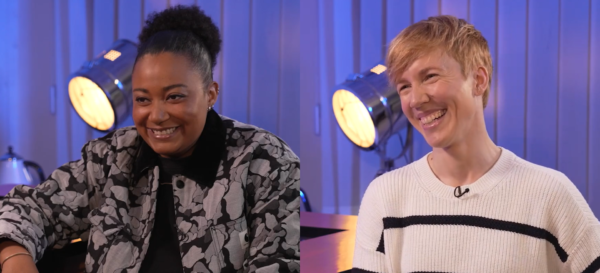
Un Une: Two new episodes of “A part Egale” you won’t want to miss this summer
-
July Editorial by Aurore Mayer: Summer—Time for a Midyear Review Before a Well-Deserved Break!
-
May Editorial by Aurore Mayer: Gender Parity, a European Vision
-
Profile: Stéphanie Humbert, Establishment director
-
“Every Woman Embodies Marianne,” by Sylvie Castioni
-
March Editorial by Aurore Mayer: March 8… And the Rest of the Year!