On the Path to Equality: A Look Back at the Highlights of the Parity Network “Un Une” Event
On Thursday, March 12, the La Poste Group’s “Un Une” Parity Network held an event. It was an opportunity to reflect on the current state of women’s rights around the world and in France, in the presence of distinguished guests. Here’s a look at this moment of reflection and sharing that positions La Poste at the forefront of the fight for equality.
A strong opening message to underscore the urgency of taking action
The event began with a poignant video highlighting several key moments in the ongoing struggle for women’s rights. From the Bobigny trial won by attorney and activist Gisèle Halimi—which marked a decisive step toward the decriminalization of abortion in France—to troubling setbacks such as the death of Mahsa Amini, a young Iranian woman arrested for allegedly not wearing her hijab properly, the film served as a reminder that women’s rights are never permanently secured.
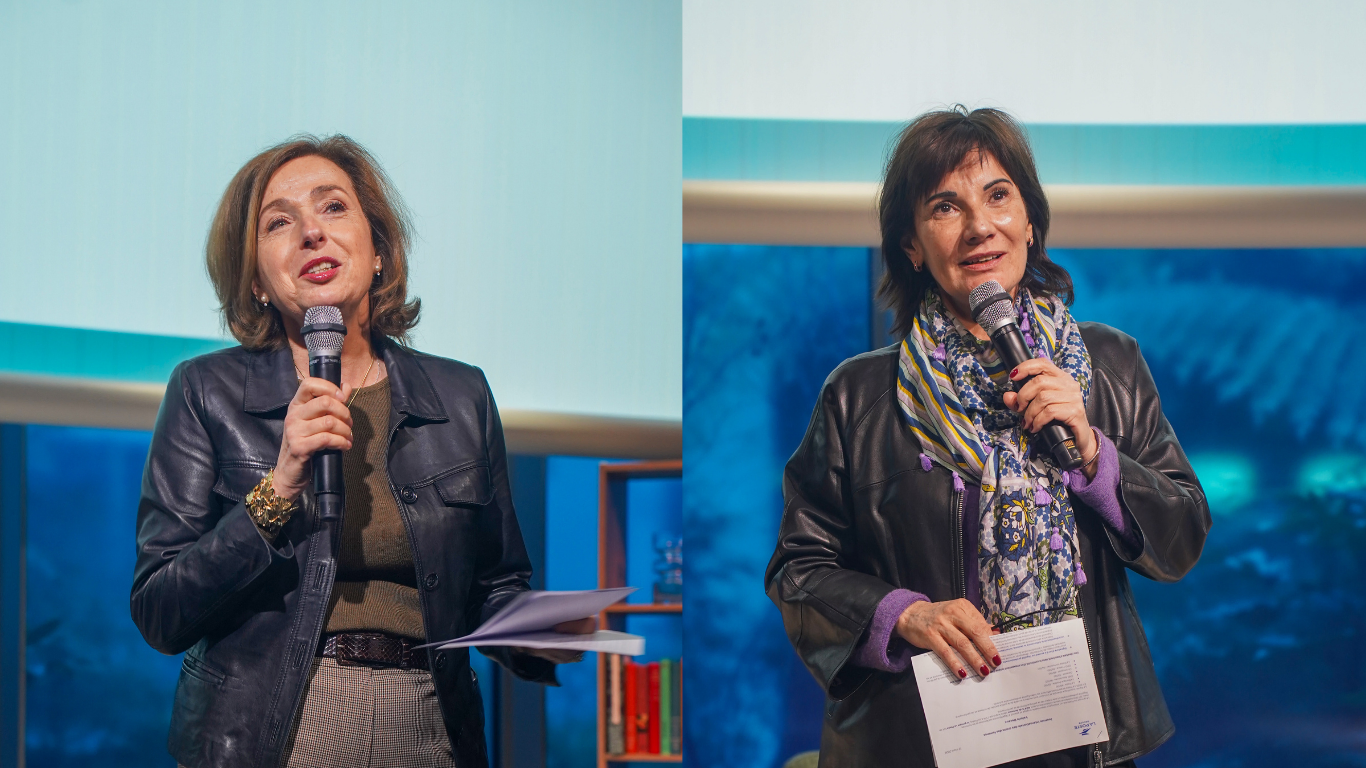
Following this overview, Marie-Aude Dubanchet, Deputy Chief Executive Officer in charge of communications, and Valérie Decaux, Deputy Chief Executive Officer in charge of human resources for the Group, took the floor. Both emphasized the essential role that companies play in promoting gender equality. But they also called for these commitments to be translated into concrete actions in order to be fully effective. This includes, for example, ensuring that candidate lists for job openings are truly gender-balanced, or making sure that succession plans systematically include at least one woman. These initiatives demonstrate that equality is not limited to broad HR policies, but is also built day by day through concrete practices.
On this occasion, Valérie Decaux also highlighted the progress the Group has made in the area of gender equality. In particular, she highlighted La Poste’s performance on the Professional Equality Index, which reached 99 out of 100 in 2025, while emphasizing the need to ensure the sustainability of this performance.
A roundtable discussion to analyze current issues
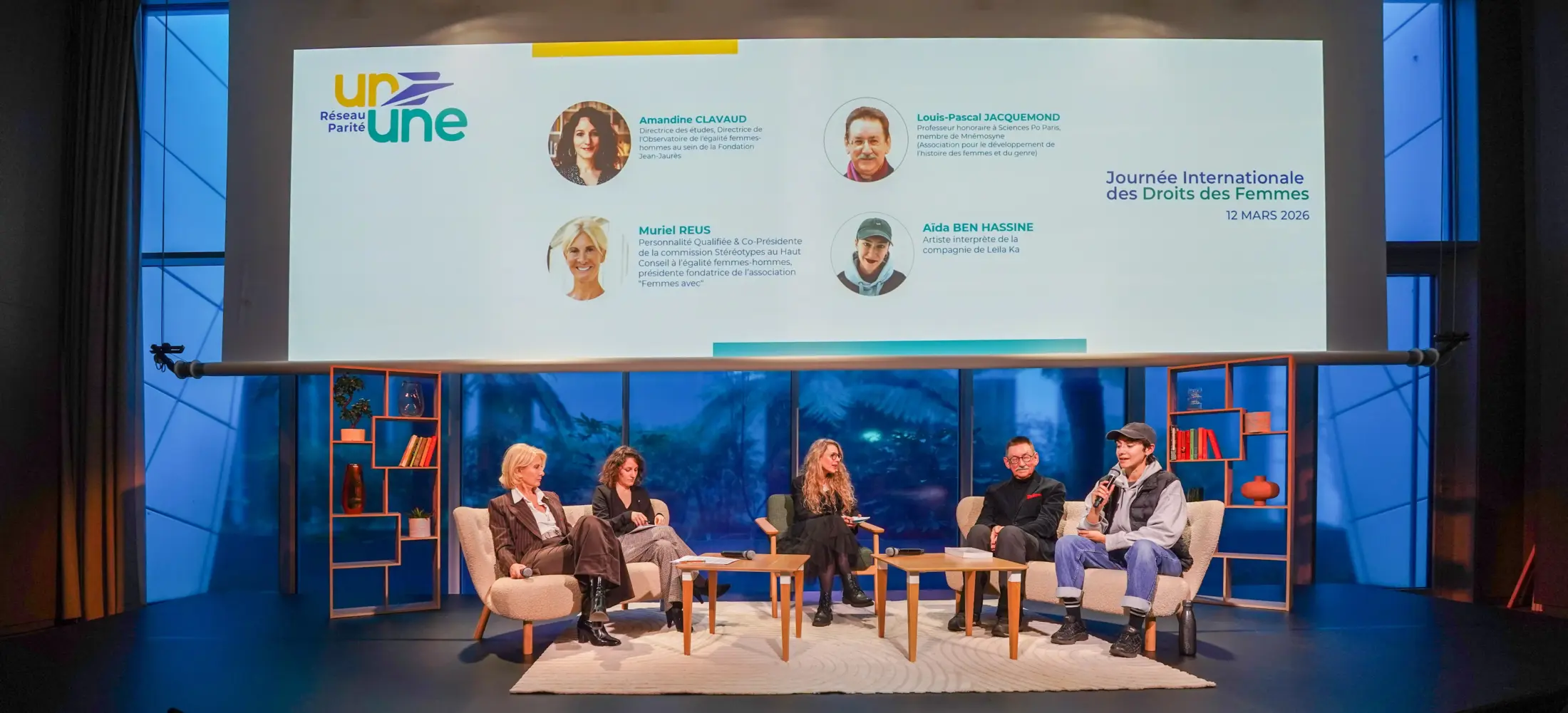
The event continued with a roundtable discussion moderated by Aurore Mayer, director of the “Un Une” Parity Network. To stimulate discussion, several renowned speakers shared their insights: Muriel Réus (Qualified Expert & Co-Chair of the Stereotypes Commission at the High Council for Gender Equality, Founding President of the association “Femmes avec”), Amandine Clavaud (Director of Studies and Director of the Observatory on Gender Equality at the Jean-Jaurès Foundation), Louis-Pascal Jacquemond (writer, historian, and professor at Sciences Po), and Aïda Ben Hassine (performing artist with the Leïla Ka theater company).
The discussion began with a focus on the essential role of art in raising awareness about women’s circumstances. In this regard, the work of Leïla Ka’s company serves as a prime example, as Aïda Ben Hassine’s presentation demonstrates. As a socially conscious artist, she helps bring these issues beyond the stage, particularly through collaborations with Arte, using short-form content aimed at raising awareness and denouncing violence against women.
The discussion then broadened to include changes in younger generations’ perceptions of equality. Amandine Clavaud highlighted an increasingly visible trend: “We’re seeing a very clear polarization: young women are more likely to embrace so-called progressive ideas, while some young men are more receptive to masculinist views.” ” Returning from the 70th session of the United Nations Commission on the Status of Women, held at UN headquarters in New York—which was attended by the French delegation led by Ms. Aurore Bergé—Muriel Réus warns of a phenomenon that should not be underestimated: “Masculinism is not a side issue; it is a political phenomenon.” For Amandine Clavaud, this observation highlights a broader issue: the weakening of democratic systems goes hand in hand with gender inequality. “Attacking gender minorities is an attack on democracy, because it amounts to depriving individuals of their fundamental rights,” she emphasizes, drawing a direct link between the rise of conservative forces and the defense of democratic principles.
These developments are having an impact in France and echo the report by the High Council for Equality, drafted by the “Stereotypes and Social Roles” commission, co-chaired by Muriel Réus. The commission warns of a troubling rise in sexism: nearly 40% of the French population subscribes to forms of sexism, whether described as “paternalistic” or “hostile.” To combat this rise, the report recommends the development of a multi-year interministerial plan that defines strategic priorities, operational objectives, and performance indicators. This plan must be accompanied by dedicated and identified budgets, enabling the effective implementation of measures throughout the country.
Louis-Pascal Jacquemond, for his part, offered a historical perspective on persistent inequalities: “We’ve made progress on gender diversity and parity, particularly through education and quotas. But when it comes to power and knowledge, women often remain invisible. We know the men who are scholars, but when it comes to naming the women who helped them or did the work for them, they remain anonymous—this is what’s known as the Matilda effect.”
In light of these developments, the issue of collective commitment has also emerged as a central challenge. For Muriel Réus, equality cannot advance without the active involvement of men: “We need men. Not just as allies, but standing alongside us, with a full understanding of the issues and serving as advocates.” This point was also emphasized by the other speakers.
A memorable artistic moment to bring the event to a close
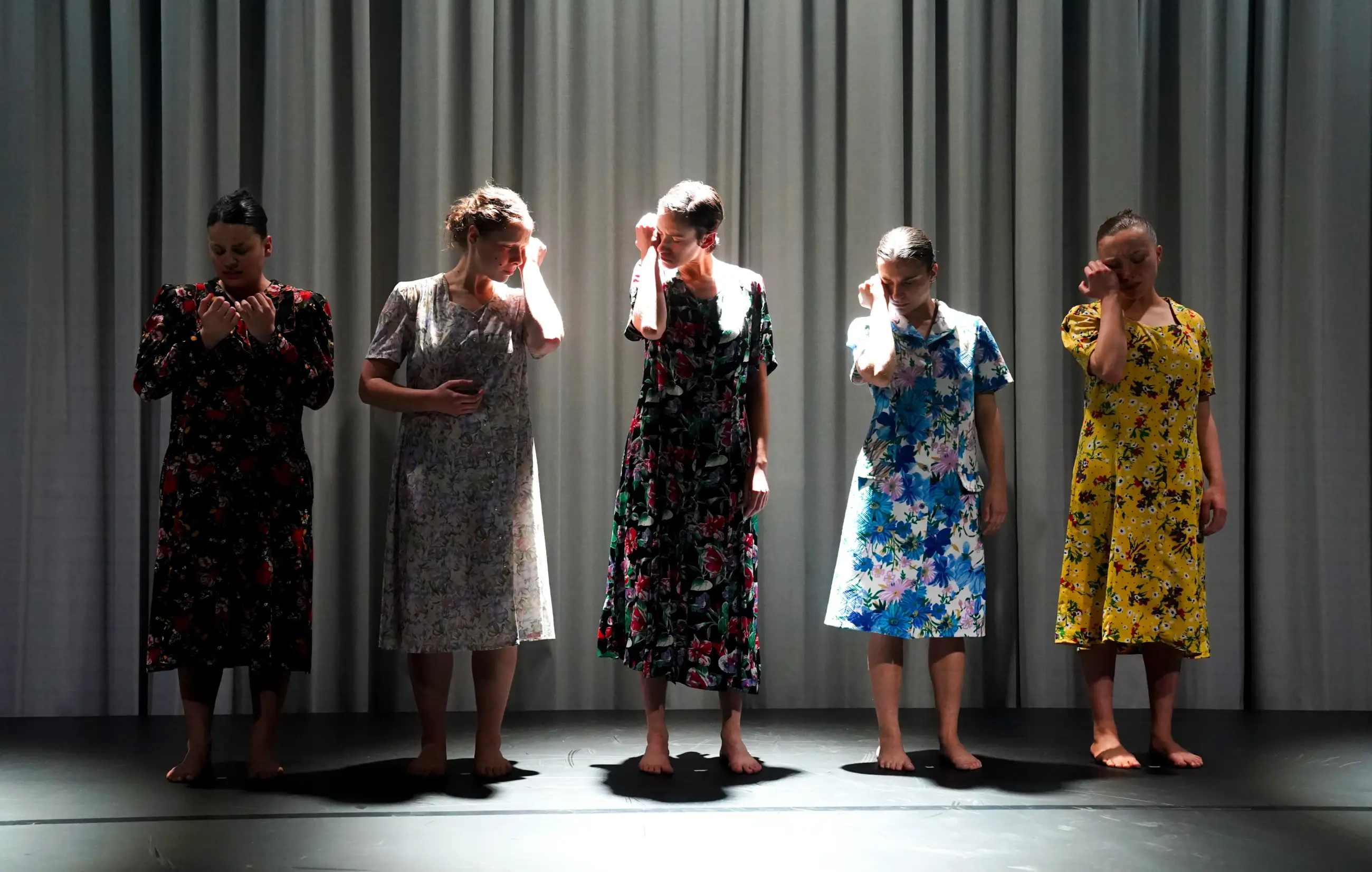
To conclude this event, the Leïla Ka Company treated the audience to an artistic interlude of rare intensity with the presentation of two excerpts from performances, including the opening sequence of *Maldonne* by the Leïla Ka contemporary dance company, whose work is currently generating widespread attention in the cultural landscape. The audience first experienced “Bouffée,” a choreography performed by five dancers. Devoid of music, the performance relied solely on the dancers’ movement and breathing, offering a moment of great sincerity. The program continued with “Pode Ser,” an equally powerful solo. It was an intense and poetic way to conclude this day of dialogue, illustrating just how issues of equality are also expressed through art and creativity.
Similar news stories
-

2026 Parity Awards: Showcase Your Initiatives!
-
The Réseau “Un Une” Tour de France continues… Next stop: Marseille!
-
The “Un Une” Parity Network Raises Awareness Among 45 10th-Grade Interns
-
What if this summer were the right time to start preparing your application for the 2026 Parity Awards?
-
A Look Back at the “Toutes Marianne(s): Liberty, Equality, Fraternity” Event
-
On the Tour route…
-
Parity Network Awards: A Successful Year for the Network and Numerous Recognized Initiatives