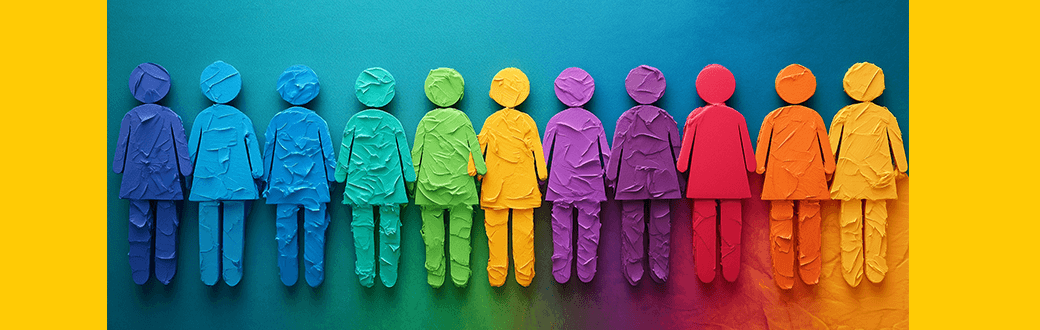
5 Biases to Avoid in Order to Be Inclusive
The work of economist Daniel Kahneman in the 1970s helped us understand that biases are, in a sense, mental reflexes. Since our brains prefer simplicity, we are all prone to taking shortcuts and making convenient interpretations. This is simply how our minds work. And the more pressure we’re under, the more we tend to rely on our “fast-thinking” system. The problem is that these biases can skew our perceptions and actions when they go unchallenged. It is therefore crucial to be aware of these biases in order to change our behavior—especially when they can influence our decision-making in the workplace. Here’s an overview of the five biases to identify in order to foster greater inclusivity in the workplace—and everywhere else.
#1 The Fundamental Attribution Error
This psychological bias involves placing disproportionate importance on an individual’s internal characteristics at the expense of external factors. In other words, if something happens to a person, the problem must necessarily lie with that person—because that’s easier than taking a systemic view of the situation. For example, it’s more comfortable to assume that a person having trouble finding a job is responsible for their situation rather than analyzing the workings of the job market.
#2 The Frequency Illusion
This selection bias involves seeing everywhere what we’ve seen once before. And it proves to be all the more challenging when it comes to assuming pregnancy! Since we’re used to seeing women in their thirties with baby bumps, we can quickly get the impression that all women of childbearing age are either already pregnant or about to become pregnant. And, as an employer, it can seem as though they’re all about to ask you for maternity leave at the same time. Naturally, this suddenly seems much harder to manage… but it’s also highly unlikely.
#3 In-group bias
This psychological mechanism involves paying more attention to those who are like us than to those who are less like us. It thus leads us to favor members of our own Group at the expense of others. And while it promotes cohesion within the group, it tends to perpetuate prejudices by emphasizing differences. One need only observe young girls and boys forming their own little cliques on the playground to realize the extent of the stereotypes we grow up with from a very young age.
#4 The Overconfidence Bias
Also known as the Dunning-Kruger effect, this bias involves firmly believing that one is better than everyone else without necessarily being so. It thus encourages the least qualified members of the Group to speak up without a firm grasp of the subject matter, due to an overestimation of their skills and knowledge…. This tendency is all the more glaring to those around them because the lack of perspective that accompanies it prevents the individual from learning from their mistakes. And for good reason—they don’t even consider them to be mistakes!
Since he doesn’t even consider them to be so.
#5 The anchoring bias
Anchoring bias is the tendency to find it difficult to move beyond a first impression. Combined with confirmation bias—the tendency to believe that our opinion is necessarily the correct one—the brain is unable to adjust its perception. This allows us to make decisions quickly, even in urgent situations… …but it also means failing to take new information into account. It’s hard not to think of the latecomer from the first day, who may suffer reputational consequences long afterward.
Similar news stories
-

When Inspiration Comes from Elsewhere: Three International Initiatives We Can Learn From
-

3 Initiatives That Make a Difference in the Fight for Gender Equality
-

5 Cultural Recommendations for This Summer
-
The 5 Key Milestones in the Advancement of Women’s Rights That We Owe to Europe
-

The 5 European Leaders Driving Gender Equality
-

5 Resources to Help Ensure Women Are No Longer Invisible in History
-
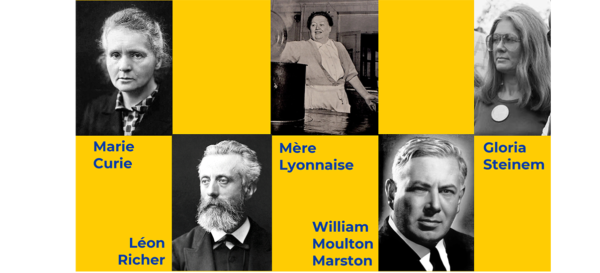
Five Feminist Figures in Mentoring
-

Our Recommendations: Gender Equality in Music