
Even in “female-dominated” fields, men rise through the ranks more quickly
Even in “female-dominated” fields, men rise through the ranks more quickly
There is a tendency to believe that a large part of the inequalities between women and men stems from the gendered distribution of occupations: in fact, certain sectors are heavily or very heavily dominated by women (communications, the social and solidarity economy, medical and social services, etc.), while others, conversely, are heavily dominated by men (construction, maintenance, driving, the military, and law enforcement, etc.).
In this analytical framework, wage gaps can be explained, on the one hand, by the lower value placed on certain sectors (the “care” sector pays less than manufacturing, for example) and, on the other hand, by flatter organizational structures that do not allow individuals to “move up the ladder” sufficiently (a communications professional has fewer opportunities for advancement within their field and into other fields than someone pursuing a career in “business”).
But according to sociologist Alice Olivier, author of Standing Out from Women (Éditions de la Documentation française, 2023), this framework is undermined by the persistent existence of a glass ceiling dynamic, which means that even in so-called “female-dominated” professions, men are more likely to secure leadership positions than women. The ESS figures are quite revealing: in this sector, which is two-thirds women and one-third men, only one-third of executives are women (CSESS, 2022—in the AlterNego Report on Professional Equality). In other words, a man is twice as likely as a woman to attain leadership positions in this sector!
But what’s behind this? Alice Olivier points to the stereotypes that attribute different qualities and skills to women and men. Men who enter female-dominated environments are expected to bring “as if by nature, composure, physical strength, and humor; [people think] they have interesting topics of conversation, that they are more technical, more rational, and more scientific,” the author says in an interview with the newspaper Le Monde. As a result, women tend to welcome men warmly when they enter “their” world. She adds that the scarcity effect works in their favor: benefiting from a presumption of leadership, men are validated in leadership roles, almost as if attracting them were “an achievement” and having them around were “a stroke of luck”!
Is the reverse also true? Sociologist Haude Rivoal, author of the essay The Making of Masculinities at Work (La Dispute, 2021), points out that the integration of women into male-dominated environments does not lead to a greater appreciation of qualities considered feminine. Either women are perceived as more fragile and emotional—which, at best, triggers protective instincts in men and, at worst, leads to their disqualification; or women must conform to masculine norms to demonstrate that they are “just as capable as a man” and must regularly renew their efforts to prove it. Therefore, there is no perception of “female added value” when women join an all-male team, whereas there is a sense of “male added value” when men join an all-female team.
In other words, regardless of the environment, it is statistically easier for men to climb the ranks, while women must work harder: in female-dominated environments, they must set themselves apart from other women to compete with men who enjoy an inherent advantage; and in male-dominated environments, they must fight to prove that they are just as capable as men.
How can we break free from this double standard that helps perpetuate the glass ceiling? First, by making everyone aware of our stereotypes—whether negative or positive—so that we can free ourselves from both limiting beliefs and prejudices. Next, we need to thoroughly examine our leadership models to uncover the traces of masculinity that still lurk beneath their apparent neutrality and to identify the inclusive qualities that make great leaders!
Similar news stories
-
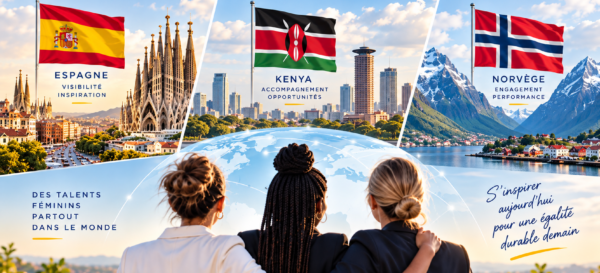
When Inspiration Comes from Elsewhere: Three International Initiatives We Can Learn From
-

3 Initiatives That Make a Difference in the Fight for Gender Equality
-

5 Cultural Recommendations for This Summer
-
The 5 Key Milestones in the Advancement of Women’s Rights That We Owe to Europe
-
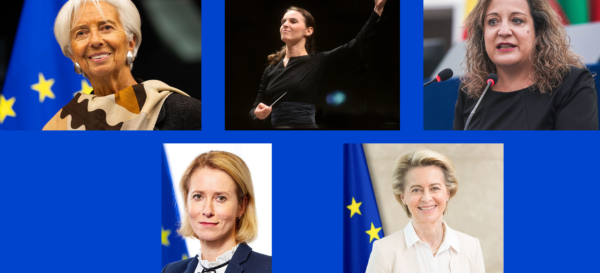
The 5 European Leaders Driving Gender Equality
-

5 Resources to Help Ensure Women Are No Longer Invisible in History
-
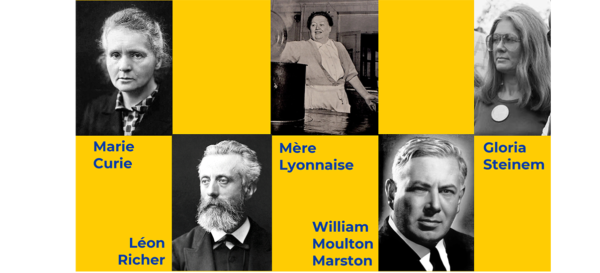
Five Feminist Figures in Mentoring
-

Our Recommendations: Gender Equality in Music