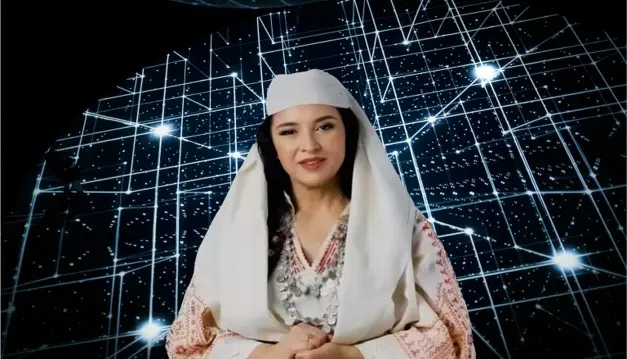
Is Diella the ideal woman?
This is a world first. By “appointing” Diella as minister on September 11, 2025: Albanian Prime Minister Edi Rama’s stated goal is to promote impartiality in the awarding of public contracts. This decision is driven in particular by the high levels of corruption in the country. But Diella is not merely a technology that, in theory, enables better decision-making: it also has a face, a body, and a voice.
The example of Diella raises the question of the personification of Artificial Intelligence, which is most often depicted as female. So, are female Artificial Intelligence characters role models for real women? Is Diella truly the ideal woman? An analysis and examination of this in the context of the reality of gender equality in the workplace today.
The ideal woman is smooth
Diella’s main character trait is impartiality. But assuming she is infallible is, in reality, incompatible with how Artificial Intelligence works. It is, in fact, difficult to build Artificial Intelligence that is free of bias. Isabelle Collet, a professor and researcher at the University of Genese, explained this in a 2018 report:
- The way these technologies learn stereotypes is that, since Artificial Intelligence (AI) is fed “billions of data points drawn from our cultures, it internalizes and reproduces historically discriminatory representations.”
- As a result, discrimination in decision-making (loan approvals, hiring, etc.):
- The lack of diversity in digital professions leads to greater biases in the very design of systems.
… and without emotion
To help ensure impartiality, Diella doesn’t let her emotions show and speaks in a gentle manner. That’s just as well, since women’s emotions tend to be disruptive. Well, some emotions are disruptive when shown by women, and others when shown by men.
And thestudy by Brescoll and Uhlmann (2008), although dated, lays a foundation that remains relevant today. In the workplace, women’s anger is attributed to “internal” causes (e.g., “she’s too emotional”), whereas men’s anger is explained by “external” causes (e.g., “someone did a poor job”). Anger in men is considered a socially expected trait, whereas anger in women runs counter to the expectation—whether implicit or explicit—that women in the workplace should be gentle. At the same time, the expression of anger challenges the stereotype that women are regularly overwhelmed by emotions beyond their control. And Diella seems to have understood this well.
The ideal woman is one you don't have to pay
For equal work and equal positions, the wage gap between men and women is about 4 percent. But—need we remind you— gender pay disparities stem from other factors. Overrepresented in jobs that are less financially rewarding, facing the “sticky floor,” the “glass ceiling,” or even involuntary part-time work… It’s difficult for women to earn as much as their male colleagues.
One thing is certain: with Artificial Intelligence, there’s no need to worry about fair pay. Diella isn’t likely to ask for a raise during her annual review. How convenient!
The ideal woman is docile
Diella didn’t just appear out of nowhere; its design and technology were created, and it was configured, to meet specific objectives. The framework is set—there’s no room for dissent or even discussion!
Yet it is often through debates and disagreements that new ideas emerge… and that mistakes are avoided. Allowing even the possibility of debate is a democratic principle that the company cannot do without without risking moving forward… with no one on board!
The ideal woman meets certain physical standards
At first glance, Diella seems to fit the standards of beauty. This observation may seem trivial, but it isn’t when you consider that discrimination based on appearance affects women even more.
In a study by the Defender of Rights, 8% of unemployed people surveyed reported having been discriminated against during the hiring process because of their physical appearance. These reports were twice as common among unemployed women, regardless of other factors such as age, dress style, weight, or educational level.
Conclusion
Let’s be careful not to assume the worst of the Albanian prime minister, who has also appointed seven women to his cabinet of 17 ministers, including himself. Gender diversity is therefore well and truly respected, and each of these women is indeed paid for the work they do. But Diella’s case may raise concerns about the relationship our society has with women and what they are expected to embody. For by constantly projecting an overly polished image, we risk becoming less and less able to tolerate reality. Thus, Artificial Intelligence and the ways we use it as a society even raise anthropological questions. Starting with: What defines our humanity?
Perhaps, then, it isn’t such a good idea to deprive ourselves of what we do best: doubt. Our secret weapon—the one that (sometimes) keeps us from making mistakes, that drives us to ask questions, to refine our opinions, and to connect with one another. So why not turn to Artificial Intelligence? But as Professor Jean-Gabriel Ganascia asks in his op-ed in *Le Monde*: “In what way would Artificial Intelligence be more principled than a human?”
Similar news stories
-
When Inspiration Comes from Elsewhere: Three International Initiatives We Can Learn From
-
3 Initiatives That Make a Difference in the Fight for Gender Equality
-

5 Cultural Recommendations for This Summer
-
The 5 Key Milestones in the Advancement of Women’s Rights That We Owe to Europe
-
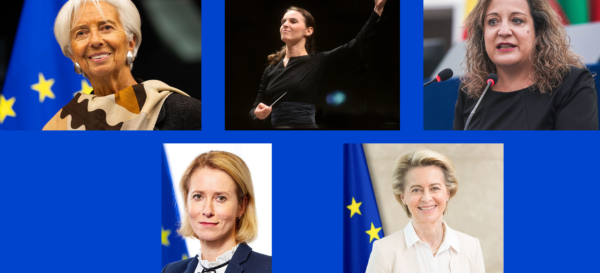
The 5 European Leaders Driving Gender Equality
-
5 Resources to Help Ensure Women Are No Longer Invisible in History
-
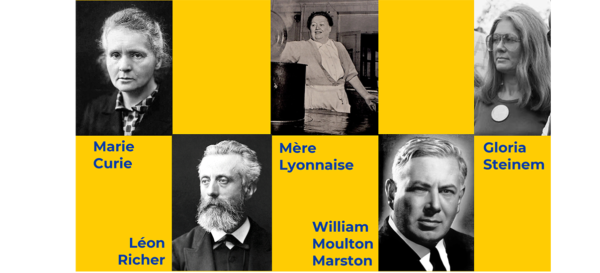
Five Feminist Figures in Mentoring
-
Our Recommendations: Gender Equality in Music