
5 Facts You Should Know About Olympe de Gouges
“Women are born free and are equal to men in rights.” You are no doubt familiar with this quote from Olympe de Gouges, a woman of letters and the author of the Declaration of the Rights of Woman and the Female Citizen in 1791. But long before this famous political treatise, she had already been involved in numerous struggles for justice and equality. Let’s shine a spotlight on this multifaceted figure.
A Pioneering Commitment to the Fight Against Slavery
As early as 1782—even as the “Code Noir,” in effect since 1685, continued to govern the French colonies—Olympe de Gouges launched a direct attack on slavery. Her first play, *Zamor and Mirza*, shed light on the atrocities suffered by Black slaves. Deemed scandalous, the play was quickly censored after only three days of performances. Subsequently, Olympe de Gouges wrote numerous pamphlets and critiques on the subject, going so far as to demand a debate on the abolition of slavery in the National Assembly.
A pioneer of feminism
At a time when women were confined to the domestic sphere, Olympe de Gouges called for equal rights for women and men. Beyond her famous Declaration of the Rights of Woman and the Female Citizen, she championed freedom of opinion and sexual freedom. In this regard, she campaigned in particular for the replacement of religious marriage with a civil contract and advocated for the introduction of divorce in 1790.
A Commitment to Decent Maternity Care
Outraged by the precarious conditions under which women give birth—particularly given the large number of women who die of puerperal fever in hospitals—she called for the creation of appropriate maternity wards to allow women to give birth in dignified conditions.
A friend of the Marquis de Condorcet
A great admirer of the Enlightenment, upon her arrival in Paris, she rubbed shoulders with many intellectuals, notably Nicolas de Condorcet. Inspired by their discussions, Condorcet published the essay *On the Admission of Women to the Rights of Citizenship* in 1991, in which he actively advocated for women’s suffrage.
An Opponent of the Reign of Terror
When the Revolution descended into violence during the period known as “the Reign of Terror,” Olympe de Gouges took a stand against the bloody excesses of the Montagnards and their leader, Robespierre. Outraged by the massacres of September 2 and 3, 1792, which claimed the lives of more than a thousand prisoners suspected of being counterrevolutionaries, she denounced the drift toward dictatorship. This boldness led to her arrest and execution in 1793.
Similar news stories
-

When Inspiration Comes from Elsewhere: Three International Initiatives We Can Learn From
-

3 Initiatives That Make a Difference in the Fight for Gender Equality
-

5 Cultural Recommendations for This Summer
-

The 5 Key Milestones in the Advancement of Women’s Rights That We Owe to Europe
-

The 5 European Leaders Driving Gender Equality
-

5 Resources to Help Ensure Women Are No Longer Invisible in History
-
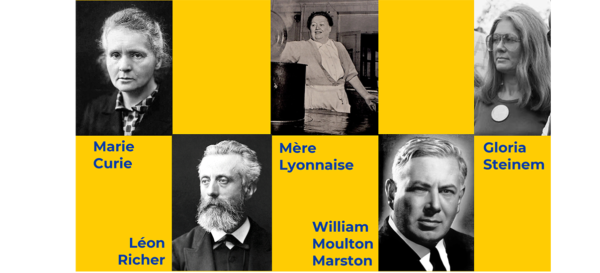
Five Feminist Figures in Mentoring
-

Our Recommendations: Gender Equality in Music